
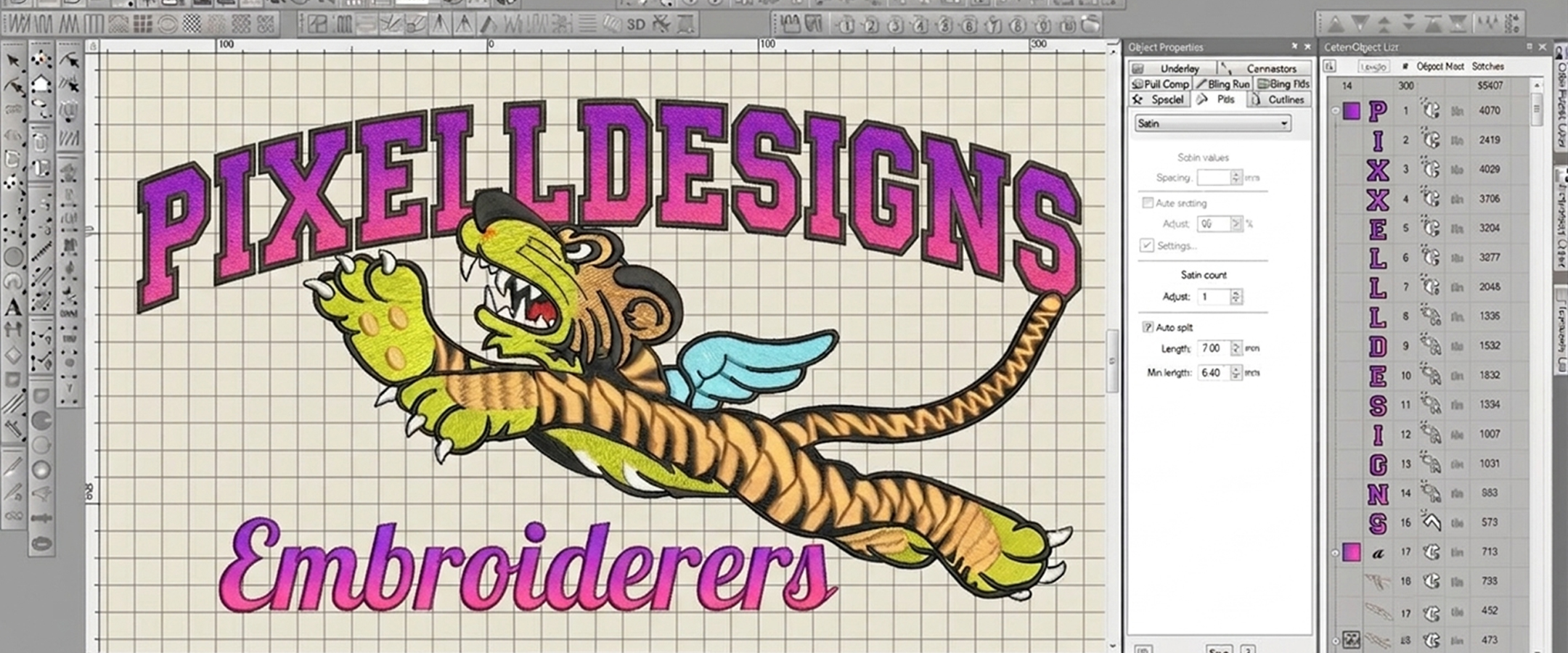
If you’ve ever wondered how a company logo, custom artwork, or detailed design is transformed into beautiful embroidery on a cap, polo shirt, jacket, or patch, the answer lies in embroidery digitizing. Embroidery digitizing is the process of converting artwork into a machine-readable embroidery file that tells an embroidery machine exactly how to stitch a design. It’s one of the most important steps in producing clean, professional embroidery, and it requires technical knowledge, creativity, and experience. In this guide, we’ll explain everything you need to know about embroidery digitizing, how it works, why it matters, and why choosing a professional digitizing service can make all the difference.
What Is Embroidery Digitizing?
Embroidery digitizing is the process of creating a digital embroidery file from artwork or a logo. Unlike simply converting one file format to another, digitizing involves manually programming every stitch, including its type, direction, density, sequence, and path. A digitizer analyzes the artwork and determines the most efficient way for an embroidery machine to recreate it using thread. The finished file contains instructions that guide the machine throughout the stitching process.
Common embroidery file formats include:
* DST
* PES
* EXP
* JEF
* HUS
* VP3
* XXX
* EMB
Each embroidery machine brand uses specific file formats, making proper conversion essential for
compatibility and quality.
How Does Embroidery Digitizing Work?
Professional embroidery digitizing follows a structured process to ensure every design stitches accurately.
1. Artwork Evaluation
The first step is reviewing the artwork to determine its complexity, size, colors, fine details, gradients, and lettering. This helps identify any adjustments needed before digitizing.
2. Choosing Stitch Types
Different parts of a design require different stitch types. The three primary stitch types include:
Satin Stitch Ideal for: Text, Borders, Small logos, Lettering,
Fill Stitch Best for: Large filled areas, Background shapes, Complex patterns
Running Stitch Commonly used for: Fine details, Outlines, Decorative elements
Selecting the correct stitch type is essential for achieving clean and durable embroidery.
3. Setting Stitch Direction
Stitch direction influences how light reflects off the thread, giving embroidery depth, texture, and dimension. Proper stitch angles also reduce distortion and improve the overall appearance of the finished design.
4. Adjusting Stitch Density
Stitch density determines how closely the stitches are placed together. Too many stitches can make embroidery stiff and cause thread breaks, while too few stitches may leave gaps in the design. A professional digitizer balances density according to the fabric and artwork.
5. Adding Underlay Stitches
Underlay stitches create a stable foundation beneath the visible embroidery. They help prevent shifting, improve stitch quality, and produce cleaner results on a wide range of fabrics.
6. Pull Compensation
During embroidery, stitches naturally pull the fabric inward. Pull compensation offsets this movement so shapes, text, and outlines remain accurate after stitching.
7. Machine Testing
Before delivery, the design should be reviewed and, when possible, tested to ensure it runs smoothly and produces high-quality results with minimal thread breaks or registration issues.
Why Is Embroidery Digitizing Important?
A professionally digitized file directly affects the quality of the finished embroidery.
Proper digitizing helps achieve:
– Cleaner stitching
– Sharper details
– Better lettering
– Reduced thread breaks
– Faster machine operation
– Improved fabric stability
– Consistent production results
Poor digitizing can lead to uneven stitching, gaps, puckering, thread breaks, and distorted designs that waste both time and materials.
Can Software Automatically Digitize a Logo?
Many embroidery programs offer automatic digitizing features, but these tools cannot accurately interpret artwork the way an experienced digitizer can.
Auto-digitized files often result in:
– Excessive stitch counts
– Poor stitch direction
– Distorted lettering
– Unnecessary trims
– Weak underlay
– Poor fabric compensation
Professional manual digitizing remains the best option for achieving high-quality embroidery
Which File Formats Are Used for Embroidery?
Different embroidery machines require different file formats. Some of the most common formats include:
| File Format | Compatible Machines |
| DST | Tajima and many commercial machines |
| PES | Brother and Baby Lock |
| JEF | Janome |
| EXP | Melco |
| VP3 | Husqvarna Viking and Pfaff |
| HUS | Husqvarna |
| XXX | Singer |
Always choose the correct format for your embroidery machine before production.
What Makes a Good Embroidery File?
A high-quality embroidery file includes:
– Balanced stitch density
– Proper stitch direction
– Correct underlay
– Smooth sequencing
– Minimal trims
– Clean travel paths
– Optimized pull compensation
– Accurate lettering
– Efficient stitch count
These elements help ensure a clean finish and reliable machine performance.
Industries That Use Embroidery Digitizing
Embroidery digitizing is widely used across many industries, including:
– Corporate branding
– Custom apparel
– Sports uniforms
– Fashion brands
– Promotional products
– Schools and universities
– Military and law enforcement
– Hospitality
– Healthcare uniforms
– Custom patch manufacturing
Tips for Better Embroidery Results
To achieve the best embroidery quality:
– Provide high-resolution artwork whenever possible.
– Use vector files such as AI, EPS, or SVG when available.
– Choose the correct embroidery size before digitizing.
– Let your digitizer know the garment or fabric type.
– Specify the embroidery machine format you need.
– Request a sew-out sample for complex or high-volume jobs.
Why Choose Pixell Designs?
At Pixell Designs, we specialize in professional, manually created embroidery digitizing for businesses, apparel brands, embroidery shops, and promotional product companies worldwide.
Every design is crafted with attention to stitch quality, efficiency, and production performance. Whether you need a simple logo or a complex custom design, our team delivers embroidery files optimized for clean stitching and dependable results.
Our services include:
– Logo Digitizing
– Cap Digitizing
– Jacket Back Digitizing
– Left Chest Logos
– 3D Puff Digitizing
– Appliqué Digitizing
– Patch Digitizing
– Vector Art Conversion
– Logo Recreation
With fast turnaround times, attention to detail, and customer-focused support, we’re committed to helping
your designs look their best.